Require 98% Purity for Tirzepatide: Labs Verify With HPLC, MS
Written by Jian Wang, Founder & CEO · · Updated
Require batch-matched RP-HPLC purity of at least 98% for pharmaceutical-grade research work, and treat anything below 95% as unsuitable for data you plan to publish or build on. The first move on receipt is a mass spectrometry identity check against the certificate of analysis, not a visual inspection of the vial. Skip that step and you’re trusting a document you can’t independently verify. Tirzepatide sold this way is research-use material only, never intended for human administration, and the FDA has flagged unapproved GLP-1 products marketed outside its regulatory review as a real safety concern.
TL;DR:
- Vendors’ certificates of analysis often lack detailed method parameters and independent MS confirmation, making them unreliable for verifying purity.
- Anything below 95% HPLC purity is unsafe for research use, while 98% or higher is essential for pharmaceutical-grade tirzepatide.
- Lipidated and linker-related impurities, oxidation, and tirzepatide–B12 adducts can significantly affect purity readings and require MS verification to detect.
- Independent testing across multiple vendors reveals frequent discrepancies in claimed purity and actual batch content, highlighting the importance of verification.
- Proper storage involves freezing lyophilized peptides, protecting from light, and avoiding multiple freeze-thaw cycles to maintain measured purity.
Table of Contents
- What Tirzepatide Purity Percentage Actually Means
- Which Lab Methods Actually Confirm Tirzepatide Quality
- Impurities and Artifacts That Skew Tirzepatide Readings
- How to Read a Certificate of Analysis Without Getting Fooled
- Best Practices for Sourcing and Handling Once the Lot Arrives
- What Independent Lab Data Reveals Across Peptide Vendors
- A QA Lead’s Take on Cost Versus Data Integrity
- Verify Before You Trust the Vial
- Sources
- FAQ
What Tirzepatide Purity Percentage Actually Means
HPLC purity percentage measures the proportion of a sample’s total peak area that belongs to the intact target molecule, relative to everything else eluting in the run: fragments, related substances, and degradants. It says nothing about how much peptide is actually in the vial. A vendor can report 99% purity on a chromatogram and still under-fill a vial by 30%. Purity and quantity are two different measurements, and a proper certificate of analysis reports both.
For research applications, treat these bands as working rules:
- Below 95%: unsuitable for experimental use. Too much unidentified material to trust dose response or binding data.
- 95% to 98%: acceptable for exploratory research grade work, but flag it in your methods notes and expect batch-to-batch variability.
- 98% or higher: the standard specification for pharmaceutical-grade tirzepatide drug substance, with individual related substances quantified at low parts-per-million levels.
- Above 99%: the bar for high-confidence work where impurity contribution needs to be negligible, such as structure-activity or long-duration stability studies.
A quantitative mg-per-vial assay, run alongside the purity chromatogram, is what separates a real CoA from a marketing document.
Which Lab Methods Actually Confirm Tirzepatide Quality
Reversed-phase HPLC or UHPLC is the baseline method, but tirzepatide’s structure makes generic peptide protocols unreliable. The molecule carries a C20 fatty-diacid lipidation and nonstandard residues that behave differently than a typical small peptide on a column built for smaller molecules.
Run these checks in sequence:
- RP-HPLC/UHPLC with a wide-pore column. Wide-pore reversed-phase columns (300 Å) with peptide-optimized mobile phases resolve related substances that standard C18 columns miss. UV detection at 214 nm or 280 nm is standard for peptide bonds and aromatic residues.
- High-resolution LC-MS/MS for identity confirmation. This is non-negotiable, not optional. HRMS confirms molecular mass and can detect co-eluting variants that look identical to the parent peak under UV alone, including oxidation and deamidation products that shift purity readings without shifting retention time.
- Orthogonal separation when RP-HPLC resolution is ambiguous. HILIC-MS catches low-level impurities that reversed-phase UV detection can miss entirely, particularly with lipidated peptides.
- Full QC panel for anything intended for downstream biological work. Endotoxin testing (LAL), sterility, residual solvent screening, and size-exclusion chromatography for aggregates round out a defensible dataset.
Method validation should reference ICH Q2(R1) for analytical procedure validation and ICH Q6B for specifications, and a serious CoA cites which validation framework it followed.
Pro Tip: If a vendor’s CoA shows only a single UV chromatogram with no MS data, treat the purity number as unconfirmed. UV response alone cannot distinguish the parent peptide from a co-eluting impurity of similar polarity.
Impurities and Artifacts That Skew Tirzepatide Readings
Four impurity classes show up repeatedly in tirzepatide lots, and each one has a different signature:
- Sequence-related impurities. Deletion sequences and truncated chains from incomplete synthesis cycles, typically resolved on RP-HPLC but confirmed by mass shift.
- Lipidation and linker artifacts. Errors in the fatty-diacid attachment or linker regiochemistry can produce species chromatographically similar to the intact molecule, distinguishable mainly by MS.
- Oxidation, deamidation, and aggregation. These degradants accumulate with poor storage or handling and are a primary reason two vials from the same “lot” can test differently months apart.
- Tirzepatide–B12 adducts. A preprint identified a previously uncharacterized tirzepatide-B12 adduct across multiple compounded combination products, alongside substantial potency variability that a standard purity number would never flag.
That last finding matters because it wasn’t a single outlier sample. The adduct turned up in several independently tested products, which points to a systemic formulation issue rather than one bad batch. Standard RP-HPLC purity screening can miss this adduct entirely if the method wasn’t designed to separate it from the parent peak, which is exactly why MS confirmation isn’t a nice-to-have step.
How to Read a Certificate of Analysis Without Getting Fooled
A CoA that actually supports research use includes specific, checkable elements. Missing any of these is a legitimate reason to ask for more documentation before you accept the lot.
- Batch number tied to a specific chromatogram, not a generic template reused across lots.
- Full method parameters, including column type, mobile phase, gradient, and detection wavelength, not just a final percentage.
- MS observed mass confirming identity, ideally with a stated mass tolerance.
- Quantitative content assay in mg per vial, separate from the purity percentage.
- Third-party lab name and identifier, so the testing can be traced to an entity other than the vendor itself.
- Expiry or retest date based on actual stability data, not an arbitrary shelf-life claim.
If a CoA skips the quantitative assay, lacks a named third-party lab, or shows a chromatogram with no method details attached, that’s a red flag worth escalating before you run a single experiment on that material. The only reliable fix is commissioning independent testing yourself, whether through your own lab’s HPLC/MS capability or a third-party sample testing service.
Best Practices for Sourcing and Handling Once the Lot Arrives
Verification doesn’t end at the CoA. What happens between delivery and first use determines whether your measured purity still matches the vendor’s number weeks later.
- Before purchase, require the CoA, the name of the third-party lab that ran it, and confirmation that retention samples exist for that batch.
- On receipt, weigh vials against the stated fill volume, run a quick identity check on RP-HPLC, and confirm mass by MS before the material enters any protocol.
- In storage, keep lyophilized peptide frozen and protected from light, reconstitute with the solvent the vendor specifies, and split into single-use aliquots rather than repeatedly freeze-thawing one vial.
- On the bench, log every deviation from expected retention time or peak shape immediately rather than after the experiment is finished.
Set clear rejection rules ahead of time: a major unidentified impurity peak, a quantity shortfall against the labeled content, or a CoA with no traceable batch number are all grounds to reject the lot outright.
Pro Tip: Reconstituted peptide degrades faster than most labs assume. Running your identity check on a fresh aliquot rather than one that’s been through several freeze-thaw cycles avoids blaming the vendor for degradation your own handling caused.
What Independent Lab Data Reveals Across Peptide Vendors
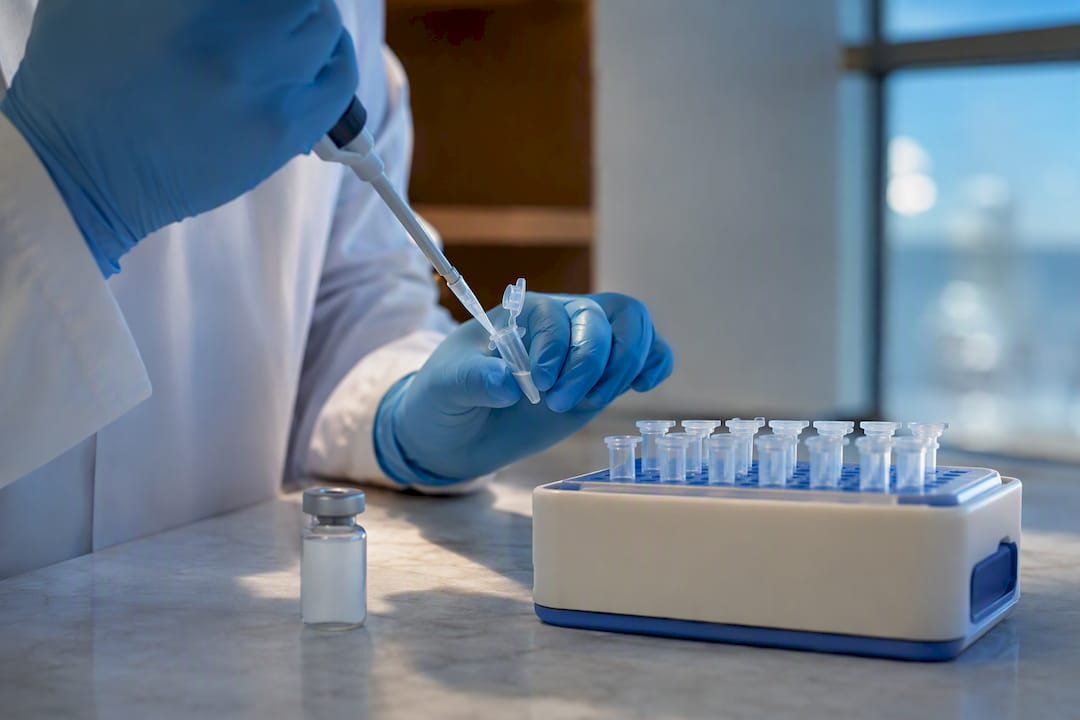
Independent HPLC and mass spectrometry assessments are run across many peptide vendors, generating a dataset most individual labs never have time to build on their own. Patterns emerge at that scale that a single CoA review won’t catch: quantity shortfalls against labeled content, CoAs that don’t match the actual batch shipped, and purity claims that don’t hold up under independent retesting.
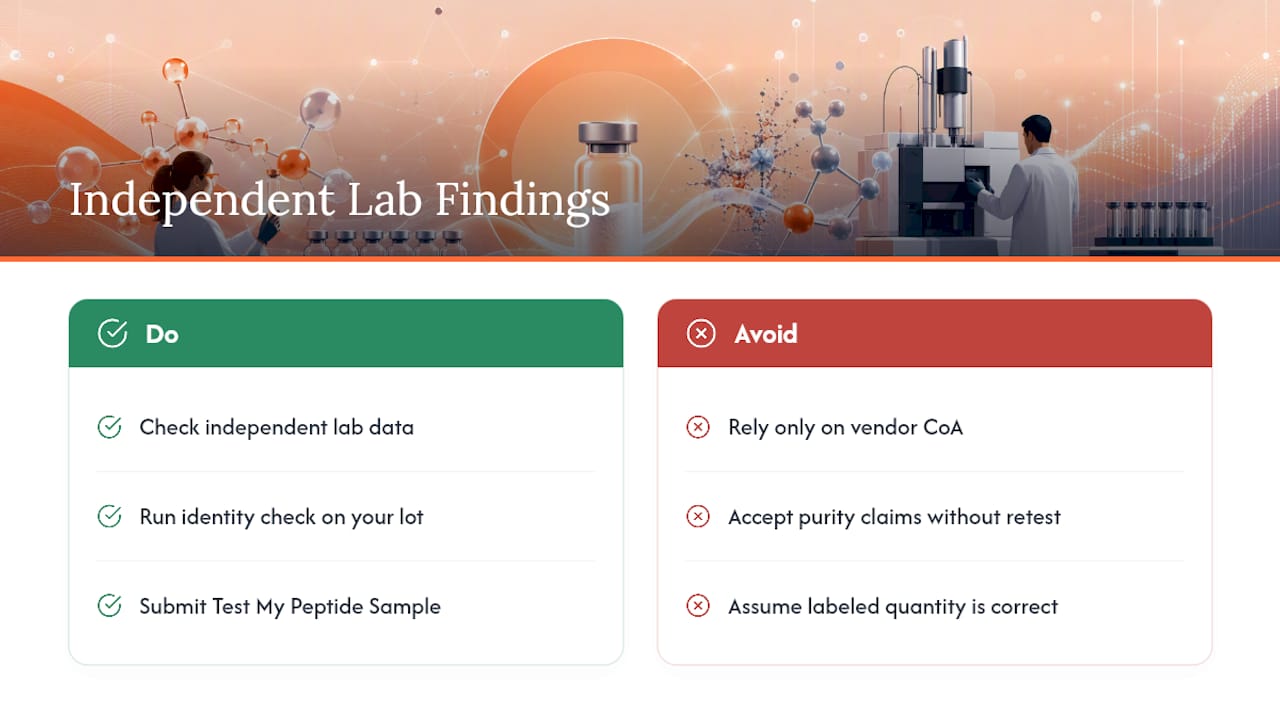
None of that replaces running your own identity check on the specific lot in your freezer. But it does give you a reference point before you commit budget to a vendor, and a Test My Peptide Sample submission lets you confirm a specific lot against that same independent testing standard rather than relying on a vendor’s own paperwork.
A QA Lead’s Take on Cost Versus Data Integrity
A cheaper lot that’s 4 points lower on purity doesn’t just shift a number on a spreadsheet. It’s the difference between a clean dose-response curve and one you spend a week trying to explain. I’ve watched a single under-characterized batch force a full re-run of binding assays because nobody caught the shortfall until the data looked wrong.
— Ross
Verify Before You Trust the Vial
The gap between a vendor’s stated purity and what actually shows up in an independent chromatogram is the single biggest source of wasted research time in this space, and it’s avoidable. Vendors are compared against independent HPLC and MS results rather than taking a supplied CoA at face value, so you’re checking a lot against real testing data before it ever reaches your bench.
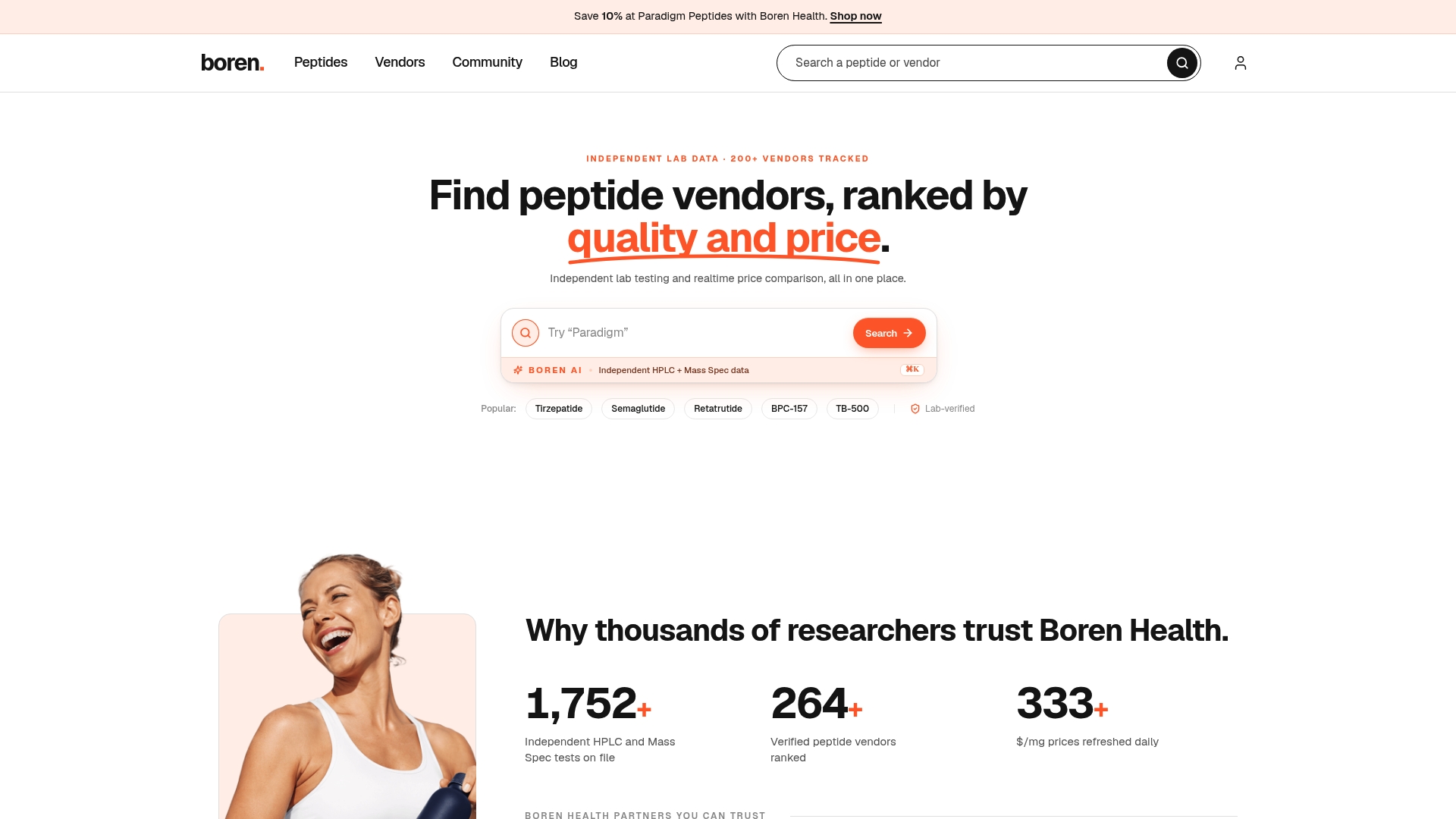
If you already have a vial in hand and need certainty on that specific batch, a Test My Peptide Sample service runs independent HPLC and MS analysis and returns a report you can cite in your own methods section. For sourcing decisions before you buy, a vendor lab results database lets you compare purity data across suppliers before committing budget to a lot you haven’t tested yet.
Sources
For protocol-level detail beyond this article, consult the FDA’s alert on unapproved GLP-1 products, the USP course on tirzepatide impurity quantitation, and PubMed literature on tirzepatide characterization. For clinical context on GLP-1 comparisons, see this semaglutide versus tirzepatide overview.
This article is general information, not a substitute for advice from a qualified doctor. Consult a qualified healthcare professional about your own circumstances before acting on anything here.
- FDA: FDA’s concerns about unapproved GLP-1 drugs used for weight loss
- Preprint: Characterization of tirzepatide–B12 adducts and potency variability in compounded products
- Laboratory Guide to Tirzepatide Testing: Methods, Compliance, and Quality Challenges (2026)
FAQ
Is Tirzepatide FDA Approved?
Tirzepatide is FDA approved as a prescription pharmaceutical for specific medical uses, but compounded or research-labeled tirzepatide sold outside that approved supply chain has not been reviewed by the FDA for safety, effectiveness, or quality.
What HPLC Purity Should I Require for Research-Grade Tirzepatide?
Require at least 98% for pharmaceutical-grade specifications, and treat anything under 95% as unsuitable for experiments you intend to rely on or publish.
Can a Vendor CoA Alone Confirm Tirzepatide Purity?
No. A CoA is only as reliable as the lab that produced it and the method details it discloses; independent third-party testing, such as Peptide Vendor Reviews’s sample testing service, catches discrepancies that vendor-supplied documents miss.
Why Does Tirzepatide Need MS Confirmation, Not Just HPLC?
RP-HPLC UV detection can’t always distinguish the intact molecule from a co-eluting impurity of similar polarity, including lipidation errors and the tirzepatide-B12 adduct identified in multiple compounded products; mass spectrometry confirms actual molecular identity.
How Should Tirzepatide Be Stored to Preserve Measured Purity?
Keep lyophilized peptide frozen and light-protected, reconstitute only with the solvent specified for that batch, and split into single-use aliquots to avoid repeated freeze-thaw cycles that accelerate degradation.